
Key Takeaways:
- The freed-up loan payment can take on a clear job. Confirming how much cash flow has actually opened up — often $500–$2,500+ per month, depending on your original loan balance and payoff pace — may help you direct it toward the priorities that matter most.
- Rebuilding often comes before building further. Cash reserves, high-cost debt, and protection coverage may need attention before every new dollar goes toward long-term investing.
- Retirement accounts and flexible wealth can work together. Tax-advantaged accounts may support your later years, while taxable assets can offer more flexibility much sooner.
Reaching a zero balance on your student loans, whether through years of steady repayment or an approved loan forgiveness program, is a significant milestone in a physician’s financial life. After years of factoring that payment into every budget decision, you’re left with a genuinely good question: where should that money go now?
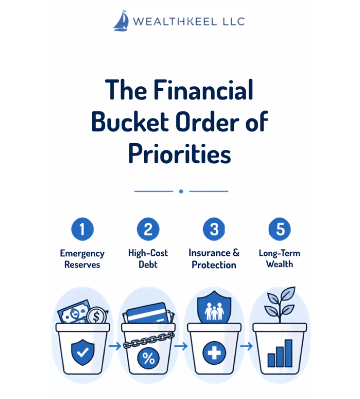
The answer rarely comes down to picking one goal and ignoring the rest. Cash reserves, remaining debt, and protection coverage tend to come first — with retirement, ownership, and lifestyle goals following close behind. The right order can shape your finances for years to come.
Confirm the Payoff and Establish Your New Cash-Flow Baseline
Before redirecting a dollar, confirm the balance is actually gone and know exactly how much monthly cash flow that frees up.
It generally helps to confirm that the loan balance has reached zero or that loan forgiveness has been fully processed, and to save the final statement, payoff confirmation, and discharge letter for your records. From there, canceling automatic loan payments, watching for a delayed refund or unexpected account activity, and checking your credit reports again in a few months can help confirm the balance is reporting correctly.¹
It can help to calculate the cash flow this actually frees up, including required monthly payments and any recurring extra principal, while leaving out bonuses or tax refunds that were never part of steady income. That number, rather than a rough estimate, can provide a more realistic starting point for updating your household budget before allocating it to reserves, investing, and other goals.
Pro-Tip: Before increasing retirement contributions or starting a new savings goal, pull your last three loan-servicer statements and add up the exact recurring payment amount. Physicians often overestimate freed-up cash flow by 15–25% by including irregular extra payments that weren’t part of their steady baseline.
Strengthen Your Financial Base Before Expanding Into Bigger Goals
Many physicians attack student loan debt aggressively once attending income arrives, and that pace can leave other parts of the financial picture behind. Cash reserves may be thinner than they should be, insurance coverage may still reflect an earlier career stage, or a lingering high-rate balance may have been pushed to the side.
That does not mean the aggressive payoff was the wrong move. It means the next phase deserves the same discipline, pointed at a different set of gaps. Addressing those gaps first may give the rest of your plan a sturdier foundation, so the next major purchase or life change is less likely to leave you exposed.
Replenish Cash Reserves and Address Remaining High-Cost Debt
Your emergency fund may be worth a fresh look. The right amount generally falls somewhere in the range of 3–6 months of core expenses, depending on how reliable your paycheck is, whether your household leans on a single income, and the waiting period built into your disability policy. Keeping those reserves separate from expenses you already know are coming, such as taxes or vehicle replacement, can help them avoid competing with your everyday balance.
Any remaining credit card debt or other high-cost balances generally deserve attention before long-term investing ramps up significantly. Comparing the interest rate, payoff timeline, and flexibility of each obligation — rather than treating all remaining debts the same — can help clarify which one deserves attention first.
Update the Protection Around Your Income, Family, and Assets
Your insurance and estate documents may still reflect residency, fellowship, or your very first attending contract, which makes it worth comparing that coverage with where your career, income, and family stand today:
- Disability Insurance: Your monthly benefit, own-occupation definition, and elimination period may be worth comparing against your current specialty and earnings.
- Term Life Insurance: Coverage amounts may need to reflect what your spouse or children would actually need, including housing, childcare, and education — often in the range of 8–12x annual income as a starting benchmark.
- Umbrella and Liability Coverage: Malpractice limits and additional coverage for higher-risk assets, such as rental property, may be worth confirming.
- Estate Documents and Beneficiary Designations: Wills, powers of attorney, and beneficiary forms may need updates to reflect your current family and plan.
Accelerate Long-Term Wealth Building
Once reserves, debt, and protection are in solid shape, attention often turns to building wealth for the years ahead. Medical training compresses the number of peak-earning years available for this, and even a strong attending salary paired with an aggressive payoff can leave retirement savings behind where you’d like them.
Closing that gap usually calls for two types of accounts working together: tax-advantaged accounts that can support spending later in life, and more flexible investments that can support opportunities that show up sooner.
Prioritize the Tax-Advantaged Accounts Available to You
Higher physician income can make tax-advantaged saving especially valuable, though the right mix depends on your benefits, health coverage, and plan rules. Reviewing the full menu of options before raising retirement contributions on autopilot is often worthwhile:
- 401(k) or 403(b): Contributing at least enough to receive the full employer match can help avoid leaving money behind, and some plans also offer Roth or after-tax features worth considering.
- Health Savings Account: If you have eligible high-deductible coverage, an HSA can pay for qualified medical expenses with favorable federal tax treatment.²
- Backdoor Roth IRA: This can be useful once income exceeds the direct Roth IRA range. Existing pre-tax IRA balances can trigger the pro-rata calculation, so reviewing Form 8606 and those balances first may help avoid surprises.³
- 457(b): Some hospital systems offer this alongside a 401(k) or 403(b). Governmental and nongovernmental versions differ in distribution rules and creditor exposure.⁴
- Solo 401(k) or Other Business Retirement Plan: Consulting or locum income may support a separate business account, coordinated with a workplace plan and overall tax strategy.⁵
Please Note: A nongovernmental 457(b) generally deserves a different level of scrutiny than a 401(k) or 403(b). Its distribution provisions and creditor exposure are worth reviewing before directing significant savings into the account.
Build Flexible Wealth Outside Retirement Accounts
A taxable brokerage account gives you access to invested assets before retirement account distribution rules apply, supporting earlier financial independence, reduced clinical hours, or another goal outside your formal retirement plan. It generally makes sense to manage taxable and retirement assets as one coordinated portfolio, matching cash you’ll need soon to that shorter timeline while long-term savings stay invested.
The table below illustrates one way physicians commonly split newly freed-up cash flow once reserves and protection are addressed — actual allocations will vary by household:
| Priority | Typical Share of Freed-Up Cash Flow | Purpose |
| Emergency reserve top-off | 10–20% (until fully funded) | Cover 3–6 months of core expenses |
| Tax-advantaged retirement accounts | 30–50% | 401(k)/403(b), HSA, backdoor Roth |
| Taxable brokerage investing | 20–35% | Flexible wealth, earlier access |
| Delayed life/career goals | 15–25% | Home, family, ownership, lifestyle |
Decide Which Delayed Life and Career Goals Come Next
Medical training and years of loan repayment often push personal and professional goals down the list. With that payment freed up, it’s tempting to fund everything at once, but spreading it too thin rarely serves any one goal well. Here’s where that money is often needed most:
- Home Purchase or Renovation: Paying off your loans may improve your debt-to-income ratio, but the real cost of a home includes closing costs, repairs, insurance, and furnishings on top of the mortgage payment.
- Family Building and Education: Childcare, fertility treatment, adoption, private school, or 529 contributions may compete for attention, and it helps to fund them without losing momentum on your own retirement goals.
- Practice Ownership or Partnership: A buy-in, equipment, or relocation often calls for dedicated liquid savings — sometimes $50K–$250K+ depending on specialty and practice size — rather than money pulled from retirement accounts.
- Career Flexibility: A separate savings pool can support reduced clinical hours, a sabbatical, or simply the ability to leave a role that isn’t working without rushing the decision.
- Lifestyle Improvements: Travel, hobbies, or home upgrades can reasonably be funded with a portion of your freed-up cash flow. Setting a defined amount may help keep these choices from gradually expanding until they crowd out everything else
The goal is not simply to redirect the freed-up payment. The goal is to sequence income, protection, and growth so each dollar is doing the job it’s best suited for.
How This Looks in Practice – A Hospitalist Two Years Post-Forgiveness
Setting: Dr. Kapoor, a 38-year-old hospitalist, received Public Service Loan Forgiveness on roughly $210,000 in federal loans after ten years of qualifying payments. Her freed-up monthly cash flow came to about $1,450.
Situation: Dr. Kapoor had been funding her 401(k) up to the match but little else, and her disability policy dated back to her first attending contract. She had no dedicated home fund and about two months of expenses in reserve.
- Confirmed the discharge notice and verified a zero balance on her federal loan servicer account.
- Built her emergency reserve from two months to five months of core expenses over eight months.
- Increased disability coverage to reflect her current specialty and income, and added supplemental coverage through a private policy.
- Split the remaining freed-up cash flow roughly 60/40 between an increased 401(k) contribution and a dedicated home-down-payment fund.
Result: Within eighteen months, Dr. Kapoor had a fully funded emergency reserve, updated protection that matched her current income, and a home fund on track for a purchase within three years — without slowing her retirement savings rate.
Financial Priorities After Paying Off Student Loans FAQs
1. What should physicians do first after paying off student loans?
Confirming the payoff or forgiveness, saving final records, stopping automatic payments, and calculating the recurring cash flow that’s actually available are generally the first steps worth taking.
2. Does the plan change if the loans were forgiven through Public Service Loan Forgiveness?
The core priorities stay largely the same. Keeping the discharge notice and confirming that federal student loans show a zero balance can help close out that chapter cleanly.
3. How much emergency savings should a physician keep after paying off student loans?
The right reserve amount generally falls in the 3–6 month range for core expenses, adjusted for household expenses, job stability, reliance on a single income, and the waiting period on disability coverage.
4. Should a physician increase retirement contributions or save for a home first?
It depends on your timeline, current reserves, and employer match. Many physicians split the freed-up payment between a home fund and higher retirement contributions rather than choosing one.
5. Should physicians pay down their mortgage or invest more after student loans are gone?
Compare the mortgage rate, your tax situation, and the value you place on lower fixed expenses. Many land on a middle ground, investing consistently while making some extra principal payments.
6. When does a taxable brokerage account make sense for a physician?
Once your reserves and near-term needs are covered, especially if you want assets available before retirement account rules apply.
Build a Coordinated Plan for Life After Student Loans
Paying off student debt shifts your financial life from repayment toward resilience, growth, and the goals you put on hold along the way — and every part of that shift, from cash reserves to retirement to the home fund, connects to the others.
At WealthKeel, we help you sort through the order that makes sense for your reserves, remaining debt, protection planning, and the bigger decisions ahead. Rather than telling you what to do, we walk through your specific numbers, goals, and timeline together so the plan actually fits your life.
You do not need a complete plan, or even a clear next step, before reaching out. As your income, family, and career continue to change, we can revisit that plan with you along the way.
If you’re ready to figure out your next financial priority, we invite you to schedule a free Icebreaker Call with our team.
Resources: