
One of the most common questions we get is “how do I build a budget as a medical resident?” This came up when we first moved to Philly in 2015, and we had our new neighbors over for dinner. It just so happened that they were medical graduate students at Drexel University. After that dinner, I called the three of them WealthKeel’s first official focus group. I learned about the medical master’s route before medical school, and they shared their biggest financial concerns heading into residency. That night was a turning point for WealthKeel, since it’s when we started specializing in Gen X and Gen Y physicians.
Student loans and repayment topped their list, and that trend hasn’t slowed down. We’ve written in-depth about student loans elsewhere, so here we wanted to dig into what came up second: budgeting.
Hearing that made us proud. So we put ourselves in their shoes: if we had to build a medical resident budget today, what would it look like?
You could probably keep using the same budget you had in medical school. The real difference in residency is that you finally have income. This post assumes you have only your resident salary, without moonlighting or side income. If you do have extra income, you can add it into the free budget spreadsheet linked at the end.
Budgeting is a core pillar of a solid financial plan, and it’s easier than it sounds. A budget puts you in control of your debt, your spending, everything. It’s not a word to fear. It’s an empowering process.
Key Takeaways:
- Budgeting puts you in control of your financial life, and that’s empowering.
- Start your budget by reviewing your salary and categorizing your expenses, so you prioritize what matters.
- Tax-planning strategies and employer deductions keep your finances organized and your money working for you.
- Categorizing expenses like housing, transportation, student loans, utilities, and food helps you spend in line with your values and goals.
- FREE budget spreadsheet at the end of this post.
Prefer video over the blog? We’ve got you covered! Watch our YouTube video as we dissect this blog post for you:
📋 What changed for 2026: Federal student loan repayment rules were rebuilt this year. SAVE is gone, PAYE and ICR are being phased out, and a new plan called RAP launched July 1, 2026. If you’re on an income-driven plan or about to choose one, read the Student Loan Payments section below before you enroll.
Building a Medical Resident’s Budget: Start With Salary
Let’s start with the basics: your salary. Throughout this post, we’ll use the current national average resident salary, ~$68,200, for examples involving taxes and deductions. That figure comes from the AAMC’s most recent Survey of Resident/Fellow Stipends and Benefits, the most current authoritative source on resident pay.
If you’re in the Philadelphia area, salaries run a bit higher, which is common in larger cities given the cost of living. As one example, Thomas Jefferson’s PGY-1 salary for the current match cycle is around ~$71,000 for some programs, with pay increasing by a few thousand dollars each subsequent PGY year. Check your specific program’s current stipend schedule, since figures vary by specialty and department even within the same institution.
The money coming in is the good part of residency. Now for the part everyone dreads: money going out.
The Costs of Uncle Sam (Taxes)
As much as we love him, Uncle Sam is expensive. You’ll need to subtract every applicable tax to balance your budget: federal, Social Security, Medicare, state, local, and anything else that applies. ADP offers a solid calculator to run your specific numbers.
At the national average salary of $68,200, a single filer with no dependents can expect roughly $1,290 per month in combined taxes. That’s an estimate. Your actual number depends heavily on your state and city, so run your own figures through the calculator above.
The beginning of your career is a great time to explore tax planning strategies that ease that pressure.
One of the easiest ways to lower your taxable income is maximizing contributions to a pre-tax retirement account, such as a 403(b).
The maximum employee contribution for 2026 is $24,500. Funds in these accounts grow tax-free until you withdraw them in retirement.
Pro-Tip: If you’re pursuing Public Service Loan Forgiveness (PSLF), lowering your adjusted gross income (AGI) through pre-tax contributions to a 403(b), HSA, or FSA also lowers your income-driven student loan payment, since most current repayment plans calculate your bill from your AGI.
Staying current on tax law is another simple way to protect your take-home pay. Tax rules change often and can meaningfully affect how your money gets distributed.
Employer Deductions for Medical Residents
Employer deductions from your paycheck typically include your 403(b) contribution, health insurance, and other group benefits through your hospital. For this example, we’ll assume you contribute 6% of your paycheck to your 403(b), along with health, dental, and vision insurance. Together, these deductions run about $440 per month at the current average resident salary.
When you’re offered additional benefit packages, think carefully about what you actually need. You may see optional add-ons, like cancer insurance, AD&D insurance, or identity theft protection, that you can likely skip at this stage of life.
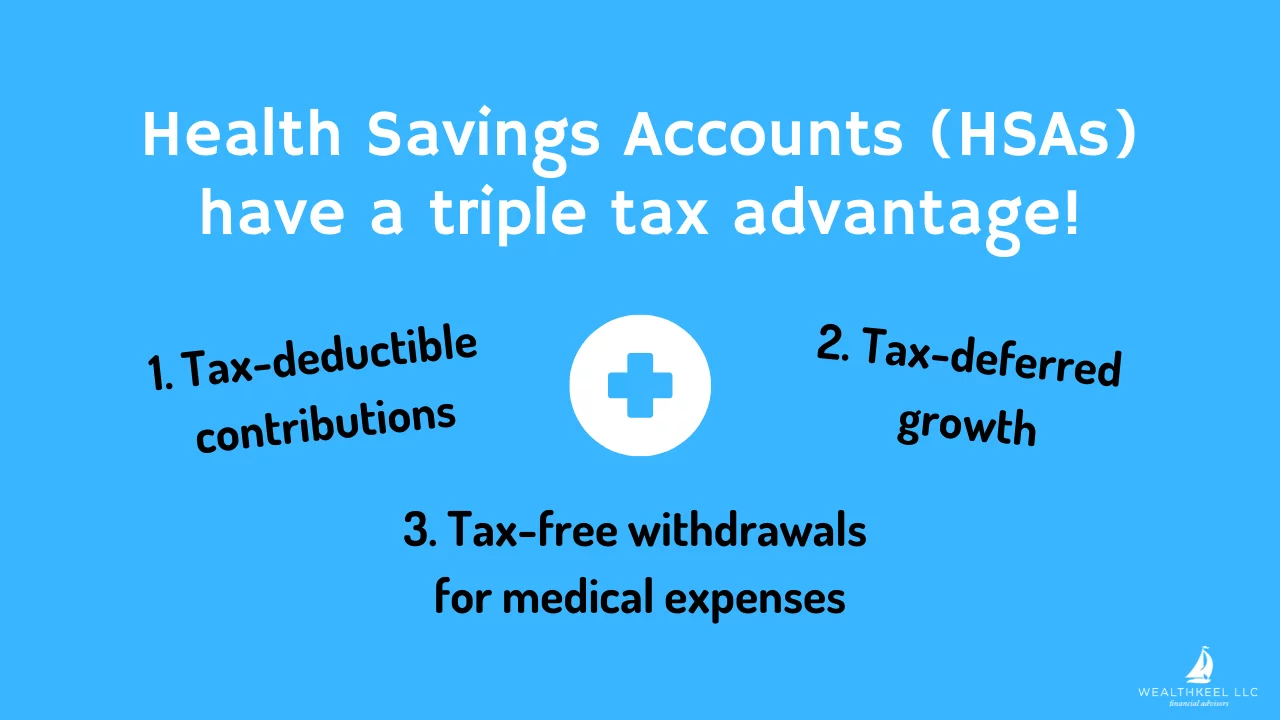
Pro-Tip: If a high-deductible health plan makes sense for you and your family, a Health Savings Account (HSA) is a strong tax tool and a potential bonus investment account.
After taxes and employer deductions, your monthly take-home pay is around $3,500 at the national average salary. This will vary state by state and city by city. Philadelphia’s local tax, for instance, runs higher than Pennsylvania’s state tax, so Philly residents typically take home a bit less than this estimate.
These are averages, so your actual take-home pay will differ. Our budget template will help you plug in your real numbers, so take a few minutes to make it your own.
Housing and Rent Costs
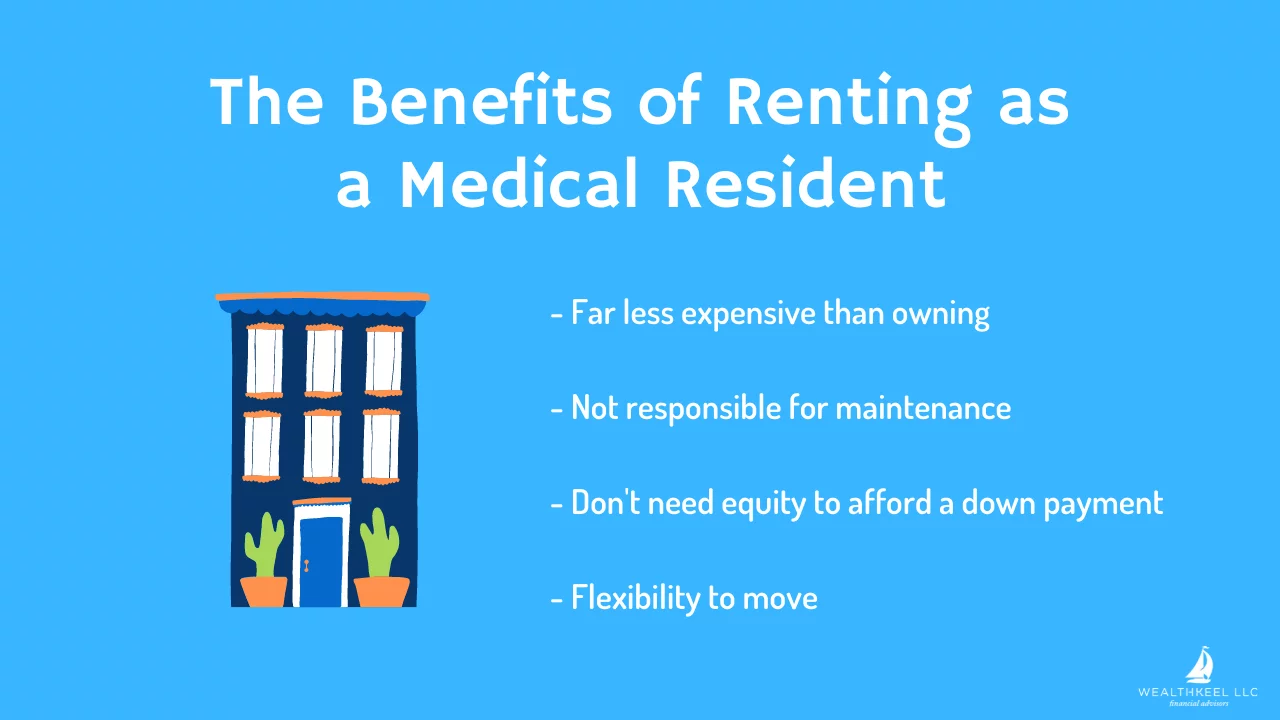
It’s still uncommon to see residents living entirely on their own or owning a home, and rent isn’t cheap anywhere. At this stage of your career, renting rather than owning is generally the better call. That can vary case by case, but in general, holding off on homeownership during training is the safer path.
Why rent instead of buy? First, it’s less expensive, though the gap depends heavily on where you live. In a big city like New York or San Francisco, both renting and owning are pricey, but owning is a different category of commitment.
Renting also means you’re usually not responsible when an appliance breaks or the heat goes out. You call your landlord, and they handle the problem. Ownership puts every repair cost on you: broken appliances, lawn care, roof maintenance, and everything in between.
You’re also a resident, so you likely don’t have a 20% down payment saved, and that’s completely normal. You may run into a broker or agent pitching a 0% down home purchase. We’d encourage you to avoid it, or at least think it through carefully. We’ve written about the physician mortgage loan in detail elsewhere, but this section is general, non-specific guidance.
The second reason to hold off on owning is the uncertainty ahead. You don’t know where you’ll land after residency. A job offer across the country, or across the world, is much easier to accept when you can hand back the keys instead of listing a house.
Budget about $1,000 per month for housing, and adjust this up or down based on your actual market.
Budget for Transportation Expenses
Transportation is where you can really get ahead on your budget. If you live in a city like Philadelphia, you can likely get around without a car, and that holds in most major cities with decent public transit. Public transportation comes with its own costs, but they’re typically minimal compared to owning a car.
Pro-Tip: Many employers in major cities let you pay for a transit pass with pre-tax dollars. If that benefit is available and you use public transit, take advantage of it.
Skipping a car means skipping the payment, insurance, gas, maintenance, and parking fees, which can add up fast in a big city.
If you do have a car, make sure it’s reliable and, ideally, paid off. This isn’t the time to buy an expensive car.
In reality, an eight-year-old car with a dent or two will do just fine during residency. Plenty of dream cars are waiting down the road.
Budget around $500 per month if you have a car, which covers insurance and gas.
Student Loan Payments for Medical Residents
Student loans take up a large share of resident spending, so working them into your budget early matters. Here’s where the rules changed significantly for 2026.
What’s different now: The One Big Beautiful Bill Act, signed in July 2025, rebuilt the federal income-driven repayment system. The SAVE plan (REPAYE’s successor) was vacated by a federal court in March 2026 and eliminated by statute. A new plan, the Repayment Assistance Plan (RAP), launched July 1, 2026. PAYE and Income-Contingent Repayment are being phased out, closing to new enrollees and sunsetting entirely by July 1, 2028. Income-Based Repayment (IBR) is the one legacy plan that survives long-term.
Where that leaves residents today:
- If every one of your federal loans was disbursed before July 1, 2026, you can generally still choose between IBR and the new RAP, and in some cases PAYE or ICR until they close.
- If you take out a new federal loan, or consolidate, on or after July 1, 2026, RAP is your only income-driven option, alongside the new Tiered Standard Repayment Plan, which is not income-driven and simply sets a fixed payment based on your balance.
RAP calculates your payment differently than the old plans did. Instead of a discretionary-income formula, it applies a flat percentage to your AGI based on an income bracket, then subtracts $50 per dependent. At the current national average resident salary, a 6% 403(b) contribution brings AGI down to around $64,000, which lands in the $60,001–$70,000 bracket and is taxed at 6% of AGI. That works out to roughly $320 to $340 per month, close to what residents on the old plans were paying, though your exact bracket and payment will depend on your specific AGI.
IBR still uses the older discretionary-income formula and, for many single borrowers without dependents, produces a lower monthly payment than RAP. If you’re eligible for both, run your numbers under each before you enroll, since the better plan depends on your income, loan type, and disbursement date.
Pro-Tip: Whichever plan you choose, understand the trade-off. If you don’t plan to pursue some form of forgiveness, such as PSLF, an income-driven payment that’s lower than your accruing interest can lead to a growing balance over time. Do your own research or work with a student loan expert to review your specific situation.
If you have private student loans, look into refinancing, since they typically carry higher interest rates than federal loans.
Federal loans work differently and generally offer lower rates and more flexible repayment than private loans. As of 2026, the main options are:
- Income-Based Repayment (IBR), available long-term
- Repayment Assistance Plan (RAP), the new default for loans disbursed after July 1, 2026
- The Tiered Standard Repayment Plan, a fixed, non-income-driven option
A few other essentials on forbearance and Public Service Loan Forgiveness (PSLF).
With forbearance, no payments are required during residency, but interest keeps accruing, so you’ll pay more over the life of the loan. We strongly recommend avoiding forbearance and using an income-driven repayment plan instead.
Pro-Tip: Seriously, avoid forbearance. Use an income-driven repayment plan instead. That’s not a typo. We meant to say it twice.
The PSLF program still requires 120 qualifying payments (10 years) on eligible federal loans for forgiveness. Payments made under either RAP or IBR count toward PSLF, so switching between the two current plans won’t reset your progress.
We understand your loan balance can feel overwhelming right now. Make a plan and stick with it.
Utilities
Utilities swing around a fair amount, but assuming you’re sharing some of these costs, budget roughly $300 per month. That figure includes your cell phone bill, plus gas, water, heat, electricity, and internet.
Cut the cable bill. As a resident, you barely have time to open the bill, let alone watch much TV. If you want a streaming subscription, budget about $10 a month for one service, split it with a friend, or borrow a login (your call on that one, no judgment here). Skip paying for every service at once. You don’t need five different streaming subscriptions running simultaneously. Pick one or two and share the cost with a friend.
Food
Food deserves a real line item in your budget.
Plan on about $500 per month, which breaks down to roughly $125 a week or $18 a day. Breaking a bigger goal into smaller chunks like this makes it far more manageable.
A few easy ways to save on food:
- Buy meat on sale near its sell-by date and freeze it.
- Stock up on beans and lentils. They’re cheap and packed with protein.
- Always shop the sales.
- Plan your grocery list ahead of time to avoid impulse buys.
- Take every free meal you’re offered (grab two sandwiches if you can). Cut back on eating out, including coffee and other drinks bought on the go.
- Shop store brands over name brands.
Medical Resident Disability Insurance
Your biggest asset is you, and your ability to wake up and go to work every day.
Disability coverage is a must-have for any physician. It protects your income if something happens to you.
Your residency hospital likely provides some group disability coverage. It’s still worth considering an individual policy to fill any gaps and to add a guaranteed insurability rider, which lets you increase your coverage later without proving insurability again. That matters once you finish residency, sign your first attending contract, and your income jumps.
When shopping for disability insurance, ask about a hospital discount, a Guaranteed Standard Issue (GSI) policy, or a unisex rate (women typically pay less under unisex pricing). You may also be offered additional riders. Research each one before adding it to make sure it actually fits your needs.
Your premium depends on your age, sex, state, specialty, and income, though most carriers don’t factor in income during training and instead cap benefits, often around $5,000 a month. Budget about $150 per month. That’s likely on the higher end, but it’s better to overestimate than underestimate here.
Emergency Fund
Yes, you should still build an emergency fund on a resident’s budget. It’s there for the moments you need it most, and those moments rarely announce themselves in advance.
Deposit $100 per month into a savings account, separate from your checking account. Keeping them apart matters, since money sitting in checking is far easier to spend without thinking twice.
An emergency fund exists for the unexpected. Without one, an unplanned expense often ends up on a credit card, and credit card interest rates make that an expensive way to cover a surprise.
Everything Else
Your budget also needs room for the small expenses that pop up. A trip to CVS, a stop at the bakery, a night out with friends: a budget shouldn’t stop you from living your life—budget $250 per month for these.
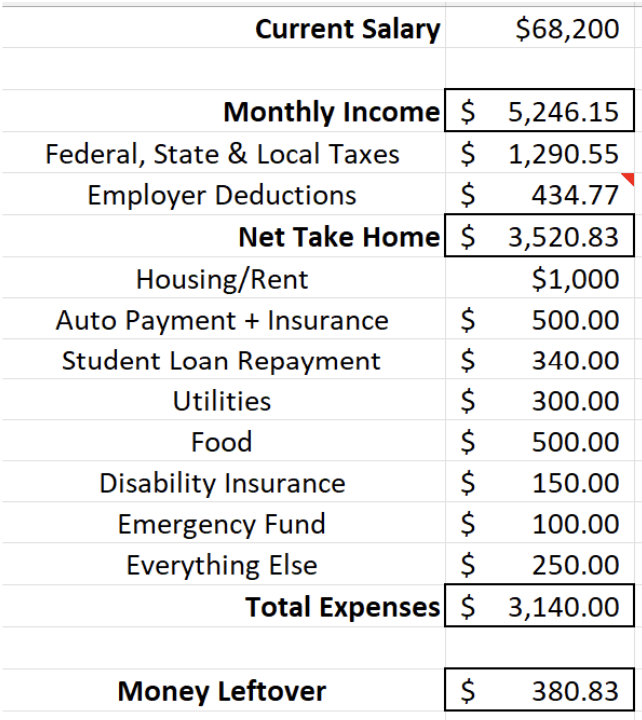
Put it all together, and a resident earning the current national average salary of $68,200 is left with roughly $400 at the end of the month after taxes, deductions, and the categories above. That’s a meaningful cushion, though your actual number will shift based on your city, your specific loan repayment plan, and your local cost of living, especially for housing, food, and utilities, which vary more than these national averages capture. Run your own numbers through the template to get a figure that reflects your actual situation.
Budgeting doesn’t have to feel like rocket science. Build your own with our Medical Resident Budget Template, and you’ll see how manageable it really is.
A few tips for the worksheet: when you update your salary, taxes, employer deductions, and student loan payment, our built-in formulas update them automatically. All three are adjustable so that you can update your tax rates, your student loan repayment plan and figure, and your employer deduction percentage based on your actual 403(b) contribution.
Looking for a more thorough, all-in-one spot for your financial life? Check out our free eBook: A Doctor’s Prescription to Comprehensive Financial Wellness [Yes, it will ask for your email 😉]